
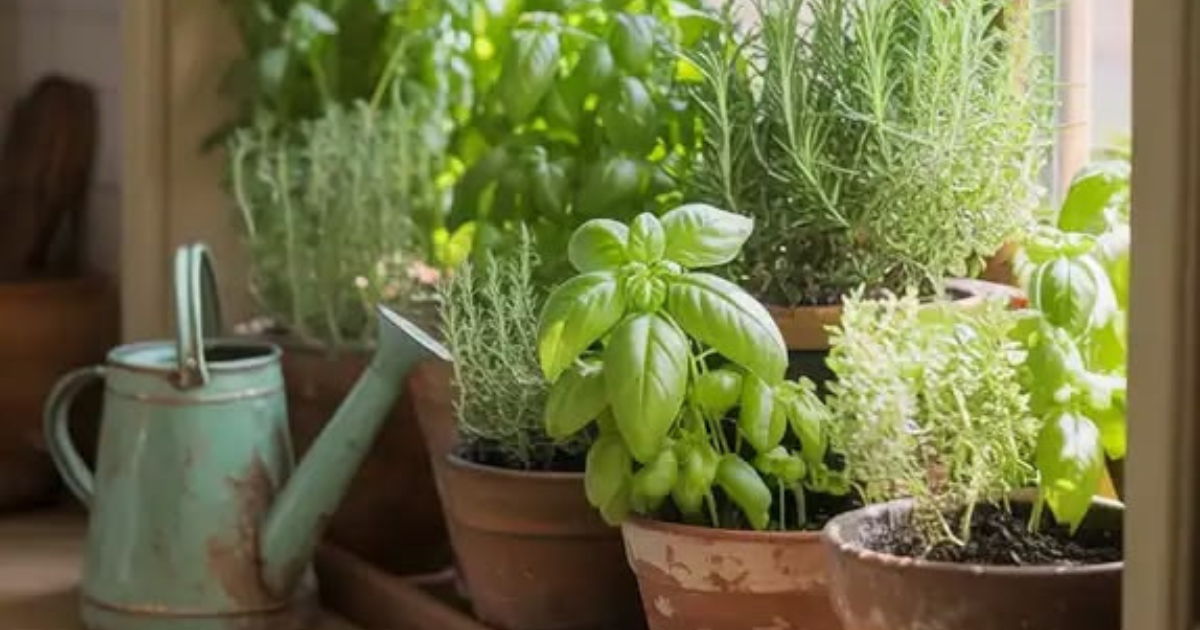
If you have been wanting to become more self-sustainable when it comes to food, but don’t have space for a vegetable/fruit garden, a mini herb garden is the best way to start. You don’t need a massive backyard or even a green thumb to experience the joy of harvesting your own fresh ingredients. My fresh herbs bring so much life and joy into my apartment!
You may be asking why would I grow my own herbs? Well, it saves money, elevates your cooking instantly, avoids pesticides and brings air-purifying nature indoors. I am going to break down 5 of the easiest, beginner-friendly herbs that I have in my space plus the basic gear you need to start today!
Before we jump in, I want to say, if you have room outdoors to have your herbs I would 100% recommend that is the route you go. Obviously, nature is going to thrive best in nature, but don’t be discouraged by me saying that because it is still possible to grow yummy herbs inside your home.
The Gear
Pots:
Let’s start with the practical elements of starting our garden before we jump into the herbs. First, we need something to hold our plants. We want to choose pots that have good drainage, to avoid root rot. Make sure there is a hole in the bottom of the pot, so roots are not sitting in excess water. Classic, breathable clay pots are perfect for preventing root rot. I personally have a mix of terracotta pots and ceramic. This is your area to be creative and have fun, there are so many different styles, patterns, and colors to choose from!
It’s also good to have drainage plates for excess water to leach into, you can get pots that already have these attached or buy them separately. I have a mix of both. Drainage plates also allow you to be a little more flexible with water since your plants will actually soak the excess water back up into the soil if it needs. Before going out and buying pots check your local thrift stores. Pots might be a little harder to find, but old ceramic or crystal plates can be perfect for unique drainage plates.
Note: Recommended pot sizes are listed below but you can put your herbs in a smaller pots if you desire. But you will risk the herbs being root bound, or not grow to their full potential.
Light:
If your apartment lacks bright, direct sunlight for 6+ hours, you should consider getting a compact indoor LED grow light, to ensure the best life for your herbs. I would only suggest this if there is not enough light for your plants to thrive, no need to spend money on a grow light when we can have natural light.
Soil:
When growing herbs indoors, the best soil needs to strike a specific balance. We are looking for nutrient-rich soil, enough to support growth but also lightweight and well-draining. I suggest getting organic soil, since many regular potting soils contain fertilizer already.
If you can look for soils that are specifically formulated for indoor container gardening, as regular outdoor garden soil might be too heavy and compact in a pot, suffocating your herbs roots.
Tip: Crushing dried eggshells and putting them on soil parodically can provide nutrients to your soil and act as a natural fertilizer.
The Best 5 Herbs
Basil:
Basil is by far my most used herb. I love to make caprese salad using basil picked seconds before enjoying. Basil needs more sun and water than our other herbs, so it will be best to keep it in a separate pot.
Light: Direct light about 6-8 hrs. A south facing window or a grow light is ideal.
Water: (Moderate to High) Likes consistently moist (but not soggy) soil. When the top 1” of soil feels dry, water. If it wilts, it’s very thirsty but will bounce back with a good watering.
Pot size: At least 6”+ deep, to give roots area to grow. Terracotta works well for Basil since it is breathable.
Tip: Pruning your basil is going to help it thrive. Cut stem right above where it spits into two leaves, and it will double the size of your plant! (never prune more than 1/3 of the plant in one sitting)
Mint:
I also use mint a lot, especially mixed with ginger beer and homemade simple syrup (trust me on this). Mint is known for being an aggressive species, so make sure it has its own pot or else it will suffocate your other plants.
Light: Partial, 4-6 hrs. It is very forgiving and can handle less than perfect window light.
Water: Mint loves moisture. Keep the soil evenly damp. Water it when the top inch of soil feels dry. It will tolerate an accidental overwatering much better than the other herbs.
Pot Size: At least 6”+ deep and on the wider side for the runners to spread out. Again, Give it its own pot! Its roots (runners) spread aggressively and will choke out any neighboring plants.
Rosemary, Thyme, and Oregano:
Now these next 3 herbs work really well together in one pot (this is how I have it) which saves space, but you can totally keep them separate too. (My set up is with 1 Rosemary, 2 Thyme, and 2 Oregano; with Rosemary in the center and the Thyme and Oregano alternating around it. My Terracotta pot is 24” across and 32” deep) I recommend a smaller version of this to not take up to much space, and one of each herb will provide plenty!
Light: Direct Light 6-8 hrs.
Water: Low. Let the soil dry out almost completely between watering. When the top 2”-3” of soil is dry, water.
Pot: To have all three in one pot I recommend At least a 8”-12” deep and 12”-14” in diameter Terracotta pot. All three-need good drainage and airflow around their roots.
Some Quick Tips
-
- 1. Don’t Overwater: Indoor plants dry out slower than outdoor ones. Stick your finger an inch into the soil.
- 2. Harvest Frequently: Don’t be afraid to snip your herbs! Regular pruning actually encourages fresh, new growth. Especially on Basil!
- 3. Use Good Soil: Use lightweight, organic potting mix to ensure proper drainage and aeration.
- Starting a small-scale indoor garden is so rewarding and is a low-risk step toward self-sufficiency and fresher meals! I have become obsessed with my garden! Which of these 5 herbs are you going to plant first? Let me know in the comments below!